FACTORS THAT DETERMINE PUMP PRICES
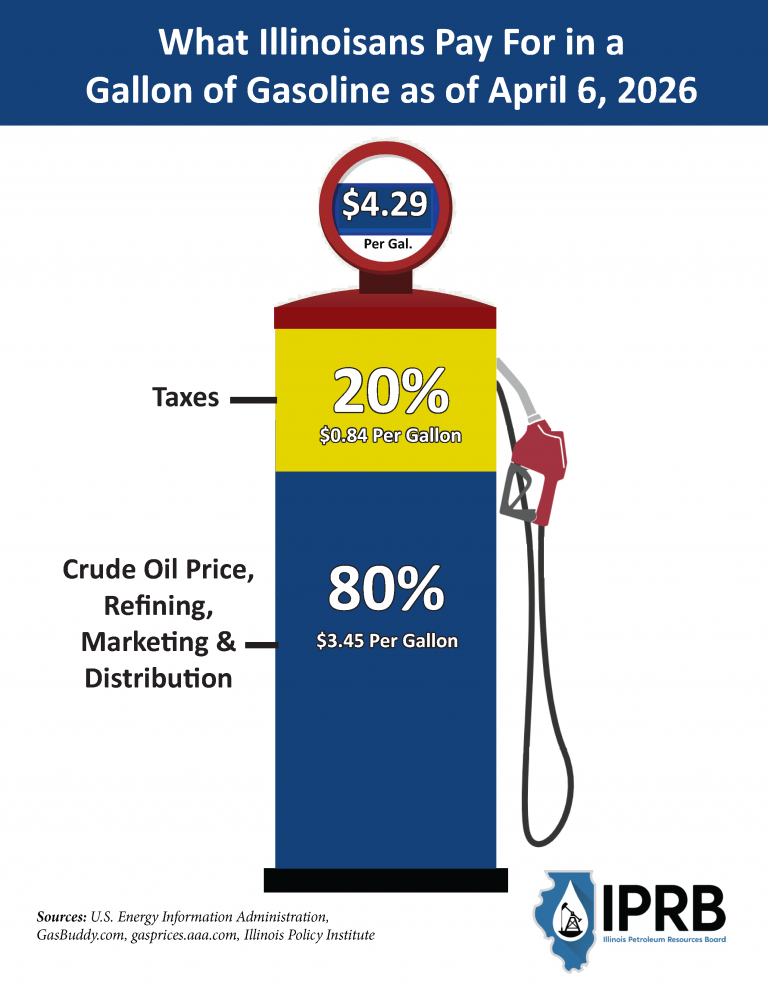
There are four primary factors that determine pump prices: Global Crude Oil Prices, Refining Costs, Taxes, and Distribution and Marketing Costs. Notably, Illinois oil producers have zero control over any of these factors.
Global Crude Oil Prices (50-55% of cost of motor fuel)
Gasoline is derived from crude oil, which is a globally-traded commodity. The global price of crude oil is set by traders throughout the world and is based primarily on global supply and demand. Illinois oil producers have no control over the global oil price. The world consumes more than 100 million barrels of crude oil per day, while Illinois produces less than 20,000 barrels per day. Demand in Illinois alone exceeds 500,000 barrels per day. Put another way, Illinois oil producers are price takers, not price makers.
Taxes (18-20%)
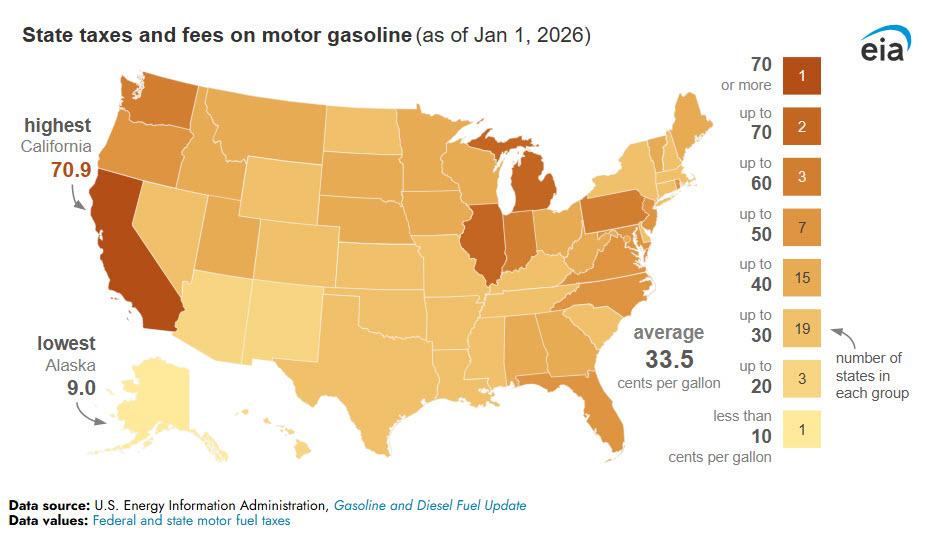
The combination of federal, state and local taxes on gasoline can account for as much as 20 percent of the price at the pump in high-tax states such as Illinois. Illinois has the second-highest state motor fuel tax in the country (48.3 cents per gallon for gasoline and 55.8 cents per gallon for diesel). When combined with federal and local taxes, Illinois drivers pay at least 84 cents per gallon in taxes each time they fill up.
*State motor fuel taxes vary widely throughout the country, which explains why pump prices are typically much lower in neighboring states such as Missouri, Kentucky and Indiana.
Refining Costs (20-25%)
Not only is crude oil difficult and expensive to find and produce, it is completely useless until it is refined into finished petroleum products such as gasoline and diesel. Refining is also a complicated and expensive process, and these costs are reflected in retail gasoline prices. The current inadequate level of domestic and global refining capacity also drives up refining costs. Although the world consumes a record 103 million barrels per day, global refining capacity has decreased since the pandemic. Refining capacity took another hit after the beginning of the Iran conflict and has decreased 3.3 million barrels per day since the conflict began. Although the United States is producing more crude oil than any nation in history, our refining capacity has decreased since the pandemic due to plant closures, regulatory burdens and shift focusing on biofuel production. The U.S. hasn’t built a major new refinery since the 1970s despite robust motor fuel demand. U.S. refineries were running at more than 96 percent capacity as of August 2027 in an effort to keep up. Notably in Illinois, none of the companies producing oil in the state own refineries. In turn, none of the four companies that own refineries in Illinois – Marathon, Phillips 66, BP and ExxonMobil – produce oil in the state.
Distribution & Marketing Costs (11-12%)
The cost of getting gasoline from refineries to the marketplace is the final major factor that determines pump prices. Communities that are far away from refineries and bulk motor fuel storage and distribution facilities typically have higher distribution and marketing costs than communities located closer to such facilities. Gasoline service stations also ultimately determine what price is charged at the pump based on a myriad of market factors. Notably, just one percent of gasoline service stations are owned by U.S. oil exploration and production companies.
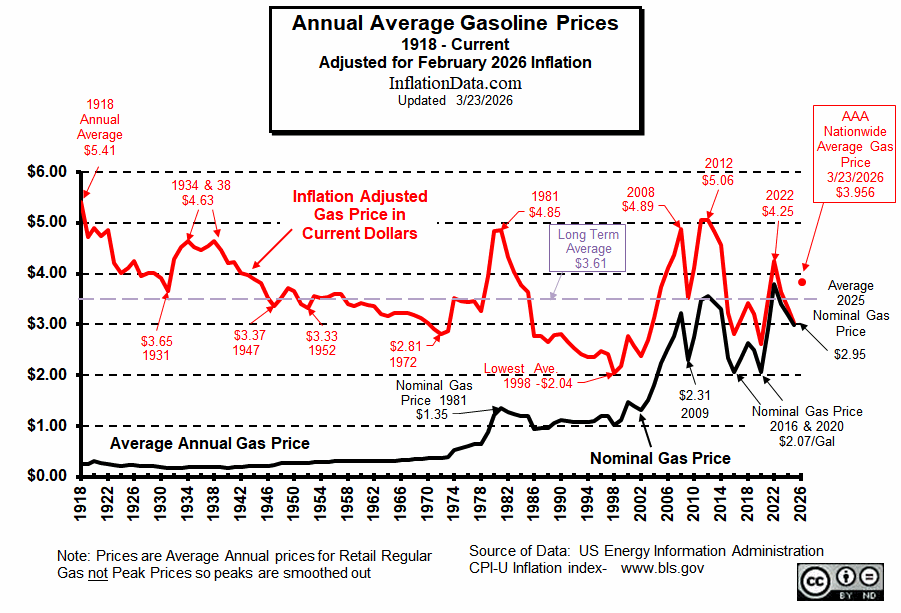
HOW PUMP PRICES COMPARE TO OTHER EVERYDAY COSTS
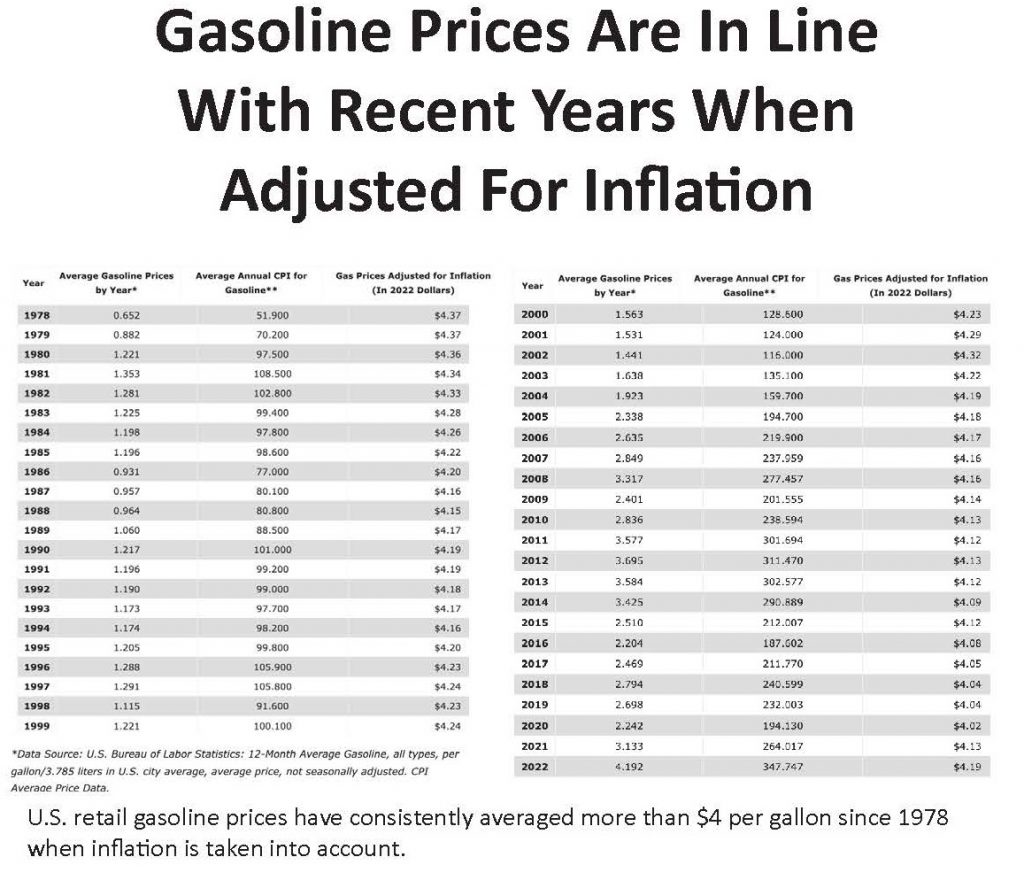
Pump prices have typically averaged more than $4 per gallon over the past several decades when adjusted for inflation.
Gas Price Comparison
Unlike other consumer products and services, gasoline prices regularly go up and down and that volatility is especially noticeable when the former occurs. The retail cost of many other consumer goods and services tend to go up and stay up. Here are a few examples:
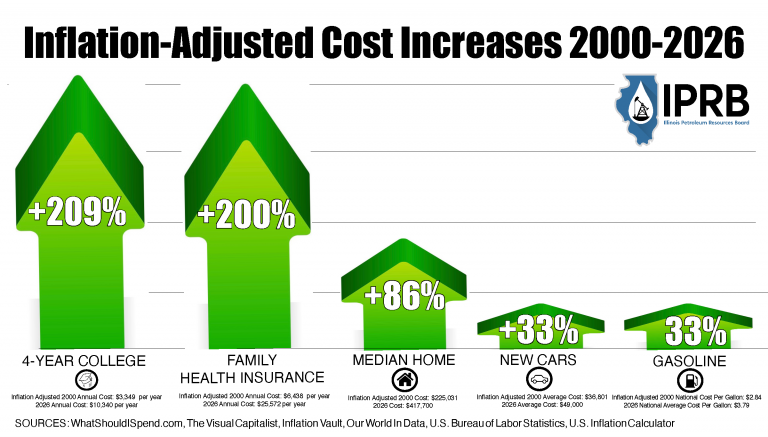
EVERYTHING COSTS MORE THESE DAYS!
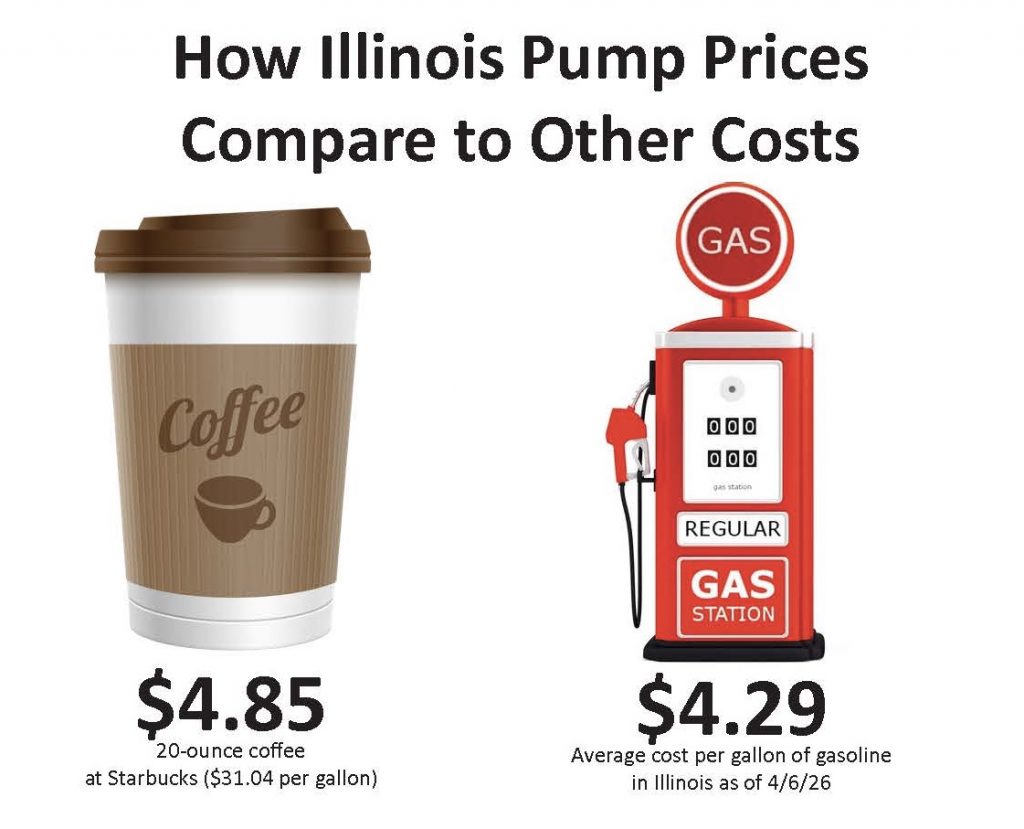
A BREWED AWAKENING
HOW PUMP PRICES VARY THROUGHOUT THE U.S. AND THE WORLD
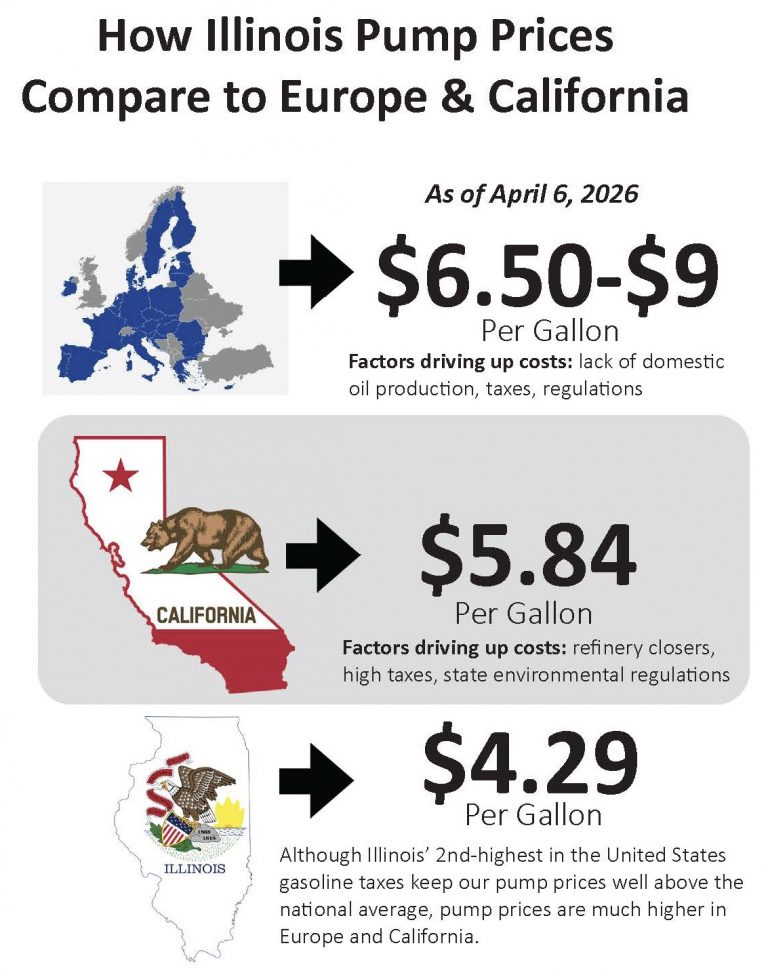
Pump prices vary greatly in different states and throughout the world. Louisiana and Texas typically have the lowest pump prices in the United States due to close proximity to major refineries and modest taxes. In turn, pump prices are much higher in Europe (see graphic to the right) and in California due to high taxes, lack of regional refining capacity and environmental policies that impose costs that are passed on to the consumer.